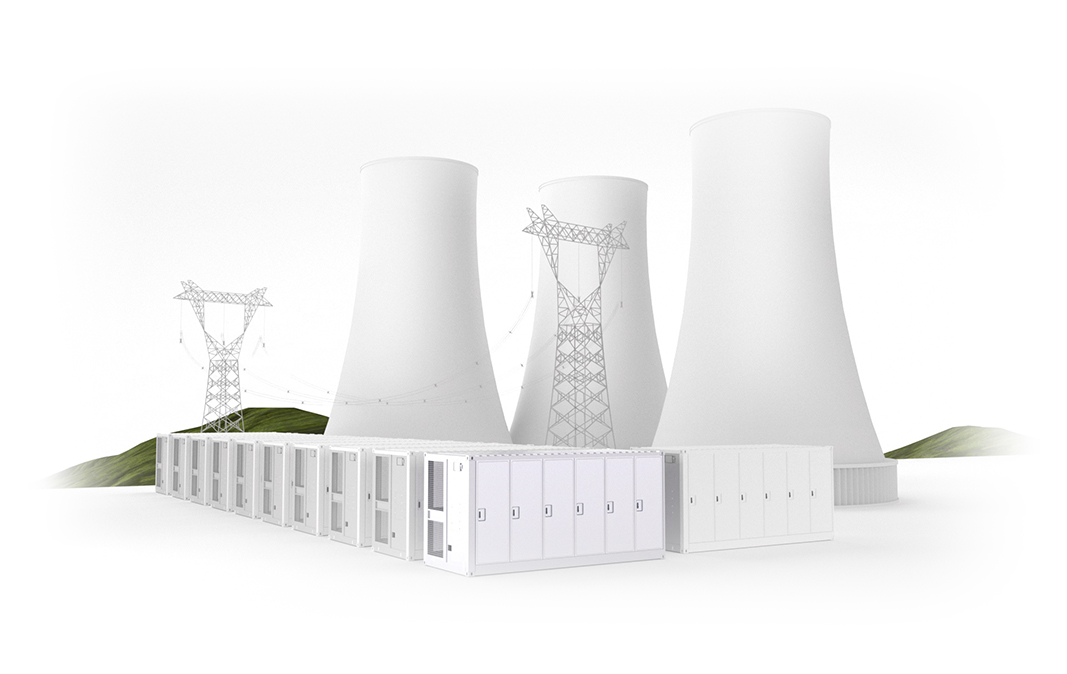
 Control-Loop Dynamics and Primary Contingency ResponsePrimary frequency regulation in power systems is the first line of defense, functioning to arrest the frequency deviation within the first few seconds of a contingency. In legacy systems, this relied on the inherent rotational inertia of heavy turbines. In modern grids, frequency regulation relies on synthetic inertia, where the controller implements a droop characteristic that dictates the power response based on the detected frequency error. This immediate reaction is vital for maintaining the frequency nadir within safe limits to prevent widespread load shedding.The engineering challenge here is the bandwidth limitation. While synthetic inertia can respond in milliseconds, the response is bounded by the physical current limit of the converter and the high-speed sampling frequency of the sensor hardware. If the controller gain is set too high, the system risks oscillating around the setpoint. Therefore, modern storage arrays are tuned using advanced compensation techniques to ensure that the primary frequency regulation provides sufficient damping to prevent oscillations that could otherwise destabilize the entire interconnected electrical transmission network.Hierarchical Decomposition: Secondary Control and StabilitySecondary control operates as a corrective loop to eliminate the steady-state frequency bias left after the primary droop response has engaged. It essentially acts as the integral action of the frequency control hierarchy. The secondary controller receives area control error signals, which combine local frequency deviation and net interchange error. The response speed of this secondary layer is significantly slower than the primary, necessitated by the need for stable communication with remote generation units and the inherent latency in network telemetry.This clear separation of timescales is essential for system stability. By decoupling the fast-acting primary loop from the slower secondary restoration, engineers avoid the interaction between these layers that could otherwise lead to limit cycles or parasitic oscillations. For EPC contractors and system integrators, the objective is to ensure that the storage system’s response speed does not conflict with the existing automated generation control tuning of the grid operator. This requires rigorous time-domain simulation and eigenvalue analysis to ensure the asset improves, rather than compromises, the regional frequency stability profile.Collaborative System Design and Control IntegrationAchieving this level of performance requires more than off-the-shelf power modules; it requires deeply integrated control architectures. HyperStrong supports frequency regulation applications with integrated energy storage systems designed to provide fast charge and discharge response and support automatic generation control.By providing a platform that supports high-frequency telemetry, their system allows for a closed-loop response to control signals, minimizing the integral error and reducing the burden on mechanical assets. This approach allows the storage system to be configured for the requirements of specific grid applications and supports reliable frequency regulation performance. This methodology ensures that the storage assets are calibrated to coexist with legacy generation, preventing any degradation of the local voltage or frequency profiles.Quantitative Analysis of Service Stacking and ROIFrom a financial engineering perspective, the performance of Frequency Regulation in Power Systems is evaluated based on the performance score assigned by the grid operator. These scores are a quantitative measure of how closely the asset follows the dispatch signal. Advanced storage assets can use state-of-charge management strategies to balance regulation requirements with available battery energy. This helps operators maintain responsive performance while managing battery operating constraints.This quantitative approach allows for the maximization of revenue through service stacking. By utilizing a control architecture that intelligently switches between primary and secondary regulation based on marginal market pricing, the asset owner optimizes the total return on the capital investment. This is not merely power delivery; it is a complex optimization problem where the physical constraints of the storage cells are mapped against the stochastic nature of market signals to derive the highest possible grid value. Such strategies are essential for the commercial viability of large-scale ESS projects.Managing the Grid Interface and ComplianceBeyond pure frequency response, modern systems must also maintain compliance with evolving regional grid codes. This includes managing power quality, such as harmonic mitigation and reactive power support, which are becoming increasingly bundled with frequency services. Effective integration requires a holistic view of the grid interface, where the storage system acts as a multi-functional node. This ensures that assets can perform their primary duty of stabilizing frequency while simultaneously providing voltage support to weak grid nodes, thereby increasing the hosting capacity for local renewable resources.By maintaining high fidelity at the grid interface, these assets provide a predictable, repeatable performance signature, which is essential for earning market certification. The focus is shifted from simply installing batteries to configuring a sophisticated, dispatchable asset that mirrors the operational characteristics of high-performance synchronous units while offering superior flexibility. This operational standard gives project financers and insurance entities the confidence to unlock competitive capital for large-scale energy infrastructure developments, securing the stability of the grid for the coming decades.ConclusionThe future of the grid lies in the precise, quantitative engineering of ancillary services. As we shift away from mechanical inertia, the burden of stability rests on the precision of frequency regulation. The capability to manage these control-loop dynamics—from the sub-second synthetic response to the system-wide secondary restoration—is what defines resilient energy infrastructure. By utilizing HyperStrong‘s frequency regulation energy storage solutions, grid operators can access fast-response storage capabilities designed to support grid stability and ancillary service applications.
Hallo! Ich bin Gourav Singh, Gründer von PromiTrend.de – Dein Puls für die Welt der Stars und Trends. Meine Leidenschaft ist es, spannende Geschichten und aktuelle News aus der Welt der Promis und Trends auf den Punkt zu bringen. Mit einem Fokus auf gründliche Recherche und authentische Inhalte sorge ich dafür, dass unsere Leser immer bestens informiert sind.
Wenn ich nicht gerade über die neuesten Stars und Hypes schreibe, experimentiere ich mit kreativen Ideen, um PromiTrend.de noch besser zu machen.
Bleib dran – die nächste spannende Story wartet schon!