As temperatures drop and the first frost approaches, the backyard begins to change. Lawn mowers see less use, patio cushions need protection from moisture, and snow blowers become essential equipment. Instead of letting seasonal tools compete for space, a planned fall-to-winter rotation can make your outdoor storage shed more organized, accessible, and ready for changing weather.
With the right storage strategy, homeowners can protect valuable equipment, keep outdoor furniture in better condition, and make winter maintenance easier. Whether you have a compact garden shed or a larger backyard structure, the key is to store summer essentials toward the back and move winter equipment closer to the entrance.
Start with a Seasonal Shed Cleanout
Before reorganizing your sheds, remove loose debris, fallen leaves, empty containers, and unused gardening supplies. Sweep the floor and check corners, shelves, and wall panels for signs of moisture or pests. A clean interior makes it easier to assess available space and identify items that need repair or replacement.
Next, divide your belongings into three categories: items for winter storage, equipment needed throughout winter, and supplies that can be discarded or relocated. Lawn care accessories, summer toys, and lightweight gardening tools can usually move to less accessible areas. Snow shovels, ice melt, snow blowers, and winter work gloves should remain within easy reach.
This simple process creates a clear storage plan before heavy equipment is moved, reducing unnecessary lifting and helping prevent clutter from returning.
Prepare Lawn Mowers for Winter Storage
A lawn mower can occupy a significant portion of an outdoor storage shed, so preparing it properly before storing it is worthwhile. Begin by removing grass clippings, dirt, and other debris from the exterior. Follow the manufacturer’s instructions for cleaning the mower deck and preparing the engine for seasonal storage.
Fuel and battery care require particular attention. Gas-powered mowers may need fuel stabilization or fuel-system preparation according to the manufacturer’s guidance. For battery-powered models, remove or store the battery as directed, keeping it in the recommended temperature range. Never store fuel containers near ignition sources, and follow local requirements for safe fuel storage.
Once prepared, position the mower toward the back or along a side wall where it will not block winter equipment. Keep its accessories, such as collection bags and spare blades, together in labeled containers. Leave enough room to maneuver the mower safely without repeatedly moving other items.
Protect Patio Cushions from Moisture and Cold
Patio cushions are another seasonal item that benefits from a little preparation. Before storing them, check the care labels and clean the fabric according to the manufacturer’s recommendations. Allow cushions to dry completely before placing them in storage, since trapped moisture can contribute to mildew, unpleasant odors, and fabric deterioration.
Store cushions in breathable storage bags or containers appropriate for their materials. Avoid compressing them excessively, as prolonged pressure can affect their shape. Place them on shelves or in a designated corner away from damp floors, leaking roofs, and potential pest activity.
If space is limited, consider storing removable cushion covers separately when the care instructions allow it. Labeling each set by furniture piece also makes spring setup easier.
For homeowners looking to store lawn mowers and cushions in a shed for winter, separating bulky equipment from soft furnishings is especially important. A dedicated cushion shelf or storage cabinet keeps fabrics cleaner while preserving valuable floor space.
Stage Snow Blowers and Winter Supplies Near the Entrance
Once summer equipment is secured, give winter essentials the most accessible positions. Place the snow blower near the entrance, allowing enough clearance to move it outside without shifting the lawn mower or patio furniture. Store snow shovels vertically on sturdy wall hooks, and keep ice scrapers, gloves, and other small supplies together on a nearby shelf.
Check the snow blower before the season begins. Inspect its belts, scraper bar, tires, and other components according to the owner’s manual. For battery-powered equipment, confirm that batteries are charged and stored appropriately. Gas-powered models require proper fuel handling and preparation.
Keep walkways clear, especially around the door. Heavy equipment should sit on a stable, level surface, and frequently used supplies should remain within comfortable reach. Good access matters more than fitting every item tightly into the shed.
Make Your Outdoor Storage Shed Work All Year
A successful winter shed organization checklist should include cleaning the interior, preparing summer equipment, drying and protecting patio cushions, checking for leaks, organizing small accessories, and moving snow-removal tools forward. Review the arrangement after the first snowfall to see whether frequently used items need repositioning.
The design of your shed also influences how easily seasonal storage works. Adequate floor space, weather protection, accessible doors, and useful shelving can make the difference between a functional storage area and a crowded one.
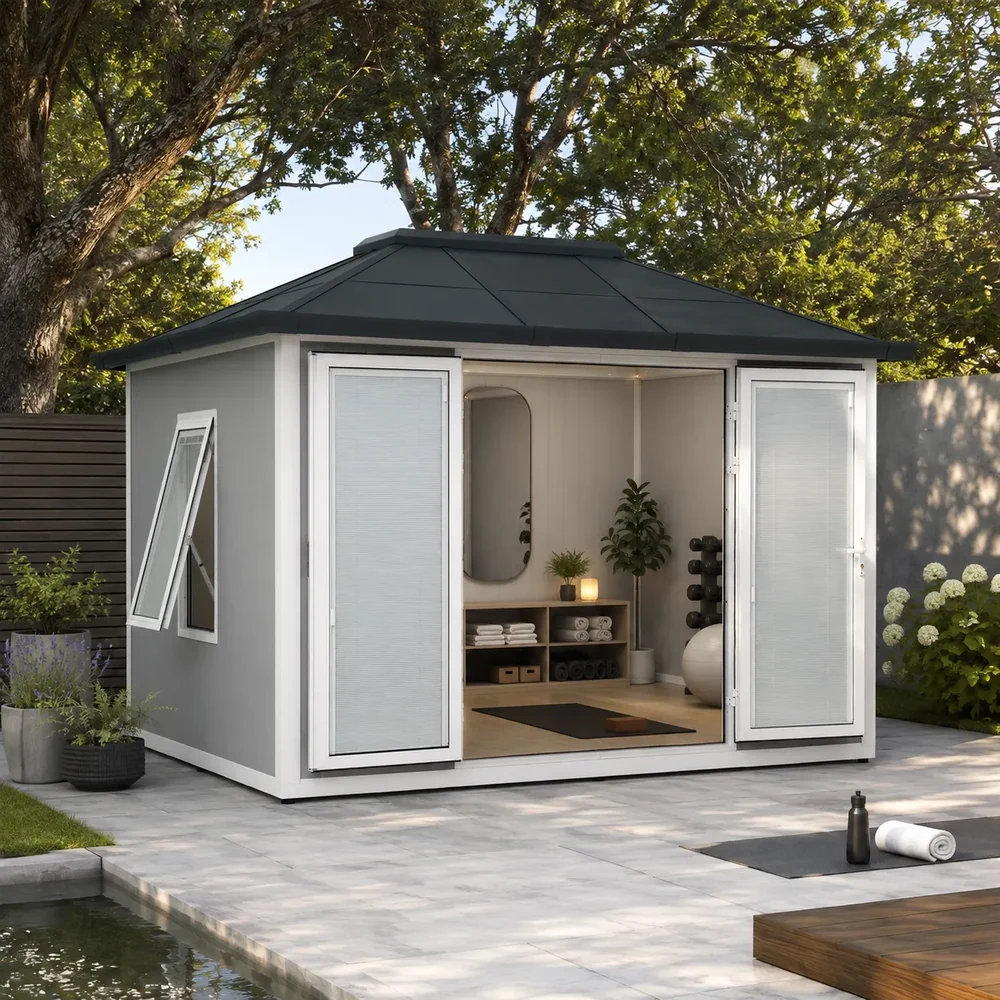
SUNJOY offers a range of outdoor structures for homeowners looking to organize their backyards. The SUNJOY outdoor storage and garden shed collection provides options to explore for different outdoor storage needs. For a more versatile enclosed space, the SUNJOY Esquire Beyond Shed features insulated panels and windows, offering another option for homeowners planning a multipurpose backyard structure. Check each product’s dimensions, intended use, and storage suitability before choosing a model.
Get Your Shed Ready Before Winter Arrives
Moving from fall to winter does not have to mean wrestling with a crowded shed every time snow falls. By storing lawn mowers and patio cushions carefully, staging snow blowers near the entrance, and keeping essential supplies organized, homeowners can protect seasonal belongings and simplify winter chores. With a practical rotation plan and a suitable outdoor storage shed, your backyard storage can remain useful, accessible, and organized throughout the year.
