Choosing between wood and aluminum for an outdoor shelter involves more than comparing appearance. Climate, maintenance habits, structural requirements, and the intended use of the space can all change which material makes more sense. A wood gazebo can bring warmth and a natural visual connection to surrounding landscaping, while aluminum generally offers a lighter construction profile and different maintenance demands.
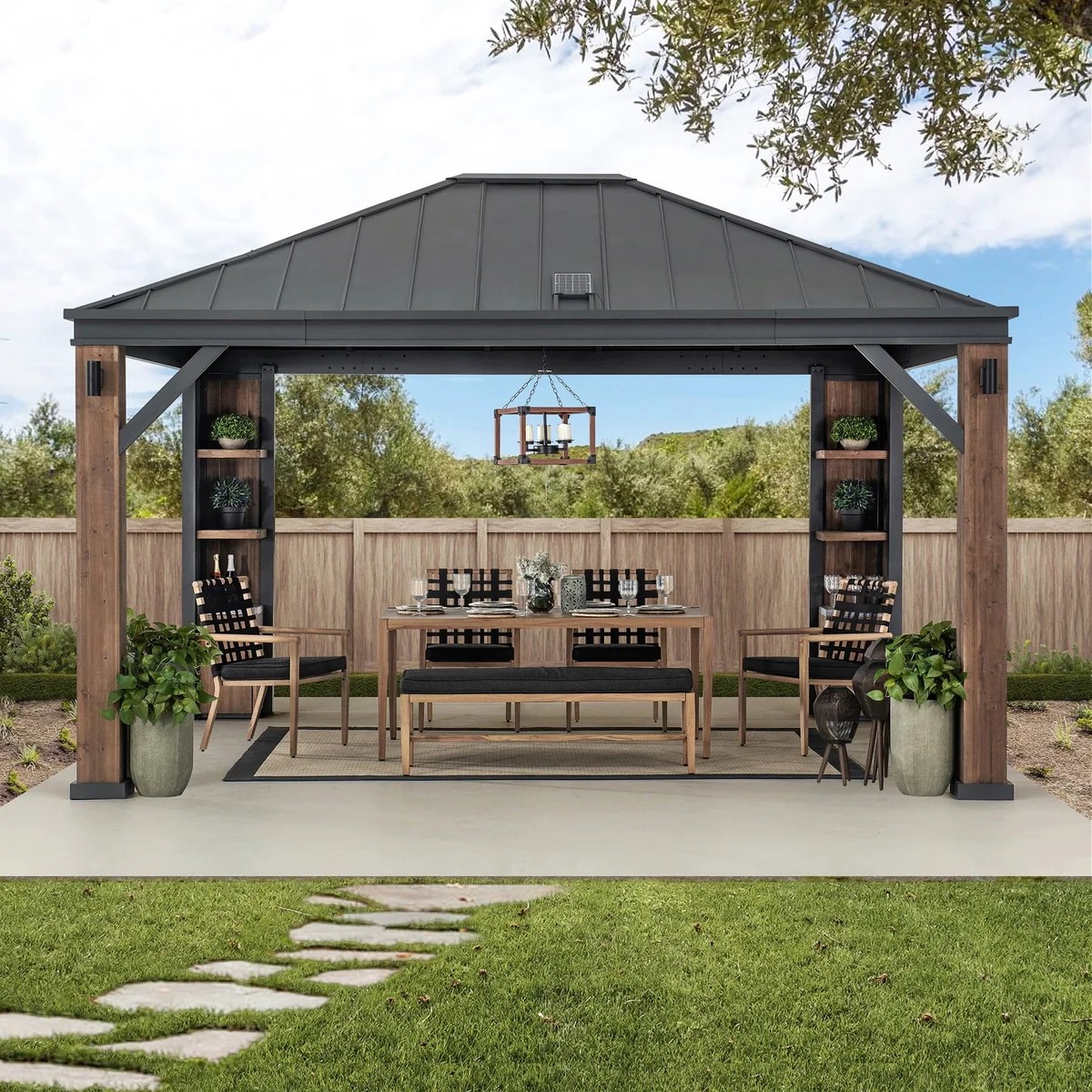
SUNJOY’s Solaria Smart Tech Hardtop Gazebo, 12×14, provides a useful reference point for the structural side of the discussion: its two 8 × 8-inch posts are secured with ground stakes, while its reported self-weight exceeds 660 pounds. Those details illustrate why material selection should be evaluated alongside anchoring, connections, and overall structural design.
Comparing Natural Character And Modern Appearance
Wood has a visual quality that fits naturally into gardens, lawns, and traditional patios. Grain patterns, warm tones, and the ability to accept stains or paints give homeowners considerable freedom when coordinating an outdoor shelter with existing landscaping.
Aluminum takes a noticeably different approach. Its clean lines and manufactured finish often suit contemporary homes, while powder-coated surfaces can provide consistent color without relying on the natural variation found in timber. Color stability, however, depends on the coating and exposure conditions.
Design preference therefore plays a genuine role in the decision. Those who want an organic visual transition between a structure and mature planting may favor timber, whereas homeowners seeking a streamlined architectural appearance may find aluminum more suitable.
Understanding Maintenance Requirements
Wood requires periodic attention because it responds to moisture, sunlight, and temperature changes. Protective finishes may need renewal, and exposed timber should be checked for cracking, discoloration, or signs of moisture intrusion. Local climate can significantly affect how often these tasks arise.
Aluminum generally avoids many of the maintenance concerns associated with organic materials. It does not rot, and routine care commonly centers on washing away dirt, pollen, and environmental residue. Scratches or damaged coatings still deserve attention because exposed metal can become vulnerable to corrosion depending on the alloy and surrounding conditions.
Maintenance should be evaluated over several years rather than by the first season alone. A wooden gazebo may require more hands-on care but offer opportunities to refresh its appearance through refinishing, while aluminum tends to favor a simpler surface-care routine.
Considering Strength And Structural Behavior
Material weight does not tell the whole story about structural strength. Post dimensions, roof geometry, connection methods, anchoring, fasteners, and foundation conditions all influence how an outdoor shelter responds to wind and other environmental forces.
Wood can provide substantial structural mass, particularly when large posts and beams are used. Its performance can also vary according to species, moisture content, joinery, and treatment. Proper installation remains important because even robust timber can perform poorly if connections or foundations are inadequate.
Aluminum offers a different engineering profile. The material is relatively light, which can simplify handling and installation, but structural performance depends heavily on member dimensions and reinforcement. A well-designed wood gazebo should therefore be judged by its complete structural system rather than by the material label alone.
Matching Materials To Local Climate
Climate often settles the debate more effectively than personal taste. Humid environments expose timber to prolonged moisture, while regions with intense sunlight can accelerate the aging of exterior finishes. Freeze-thaw cycles may introduce additional stress where water enters small cracks and subsequently expands.
Aluminum has its own environmental considerations. Coastal locations, for example, can expose metal components to salt-laden air, making coating quality, hardware selection, and routine inspection particularly relevant. Temperature changes can also cause expansion and contraction, which designers account for through appropriate connections.
Regional weather patterns should be considered alongside the property’s surroundings. Dense tree cover, poor drainage, and limited airflow can create a damp microclimate that affects material longevity. A wooden gazebo positioned in a dry, well-ventilated yard may experience very different maintenance demands from one installed beneath dense vegetation.
Evaluating Cost Beyond The Purchase Price
Initial price provides only one part of the financial picture. Installation requirements, finishing materials, periodic maintenance, replacement components, and expected service life can all affect the eventual cost of ownership.
Wood may involve recurring expenses for sealants, stains, paint, or repairs. Those costs can vary considerably depending on timber species and local weather exposure. Aluminum often requires less routine surface treatment, although specialized finishes or damaged components can still add expense.
Lifestyle should have a place in the final calculation. Someone who enjoys maintaining and customizing an outdoor structure may appreciate timber’s flexibility, whereas another homeowner may value the comparatively straightforward upkeep associated with aluminum. No single material suits every property, and the surrounding conditions deserve as much attention as the initial budget.
Conclusion
Neither material can be called universally better because the right choice depends on what the structure needs to accomplish. Timber offers natural character, customization potential, and substantial visual warmth, while aluminum provides a lighter material profile and generally simpler surface maintenance. Climate, engineering, installation quality, and long-term care remain decisive factors.
A SUNJOY hardtop gazebo can also illustrate why material selection should be evaluated alongside anchoring, post dimensions, and overall structural design. For anyone comparing wood with aluminum construction, the most useful approach is to examine the whole system: roof design, posts, connections, foundation, climate exposure, maintenance expectations, and intended use. Such a comparison gives the final decision a practical foundation rather than relying on material preference alone.

Hallo! Ich bin Gourav Singh, Gründer von PromiTrend.de – Dein Puls für die Welt der Stars und Trends. Meine Leidenschaft ist es, spannende Geschichten und aktuelle News aus der Welt der Promis und Trends auf den Punkt zu bringen. Mit einem Fokus auf gründliche Recherche und authentische Inhalte sorge ich dafür, dass unsere Leser immer bestens informiert sind.
Wenn ich nicht gerade über die neuesten Stars und Hypes schreibe, experimentiere ich mit kreativen Ideen, um PromiTrend.de noch besser zu machen.
Bleib dran – die nächste spannende Story wartet schon!